Posts

Showing posts with the label PID Controller in Control System

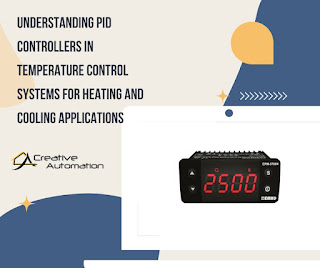
Understanding PID Controllers in Temperature Control Systems for Heating and Cooling Applications
Image
  Introduction: Temperature control is a critical aspect in various industrial and domestic applications, where precise regulation of temperature is essential for optimal performance. One widely used method for achieving this control is through the implementation of PID controllers. This article explores the working principles of PID controllers , their application in temperature control systems for heaters and coolers, and the significance of precise temperature regulation in diverse settings. PID Controller Working: PID controllers, which stands for Proportional-Integral-Derivative, are feedback control systems designed to maintain a desired output (temperature in this case) by continuously adjusting the input (heating or cooling). The three components of a PID controller work together to achieve a stable and accurate temperature control system. Proportional (P): The proportional term calculates the difference between the desired temperature setpoint and the current temperature...

Optimizing Temperature Control Systems with PID Controllers: A Comprehensive Guide for Cooling and Heating Applications

Image
  Introduction: Temperature control is a critical aspect of various industrial and domestic processes, ensuring that the desired temperature is maintained for optimal performance. In many applications, such as cooling systems and heaters, PID (Proportional-Integral-Derivative) controllers play a pivotal role in achieving precise and stable temperature regulation. This article explores the fundamentals of PID controllers and their applications in temperature control systems, with a focus on both cooling and heating processes. Understanding PID Controllers: PID controllers are a type of feedback control system that uses three main components to adjust the system output and maintain the desired setpoint. The proportional term (P) responds to the current error, the integral term (I) considers past errors over time, and the derivative term (D) anticipates future errors. This combination allows PID controllers to efficiently regulate temperature in dynamic environments. Temperature Contr...